

This three-year research project received a grant from the Social Sciences and Humanities Research Council of Canada (SSHRC) in 2018. Below you will find useful information for potential participants and partners.
Research objectives
Despite significant advances in complexity research, two questions are still awaiting an answer. What is project complexity? What strategies can be used to manage it effectively? The conceptual effort and empirical research that we will undertake will help answer these questions by, first, developing a conceptual framework on project complexity. Based on this framework, we will develop and validate empirically a series of hypotheses on the best strategies for managing different types of complexity.
Team
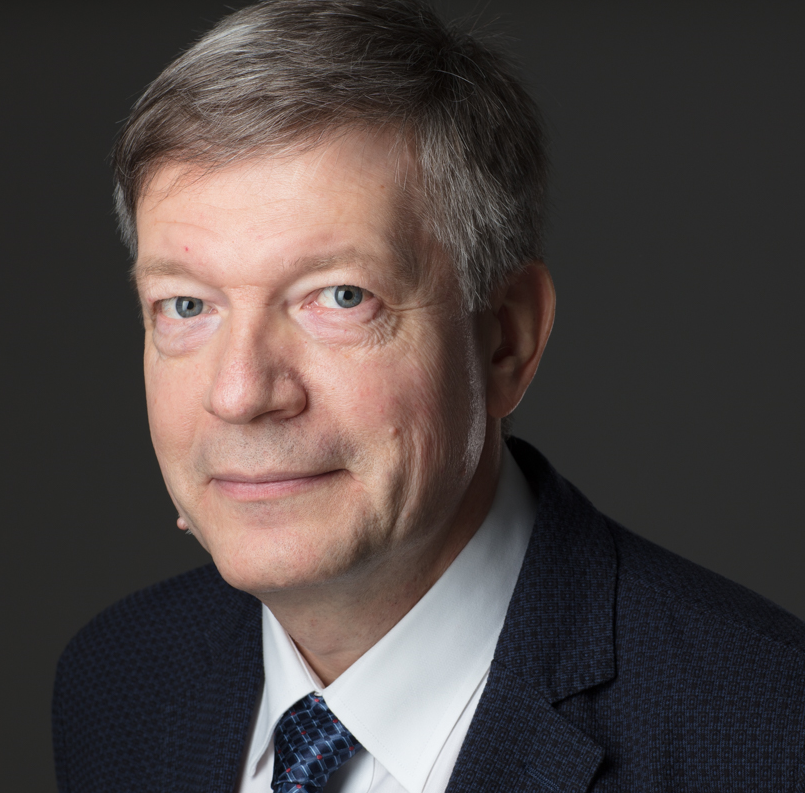 |
Principal Investigator Professor, Université du Québec à Montréal |
 |
Co-applicant Professor, Université du Québec à Montréal |
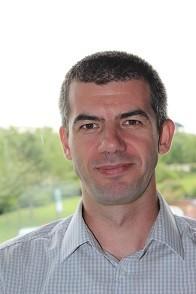 |
Collaborator Lecturer in Management, Birkbeck, University of London, Royaume Uni |
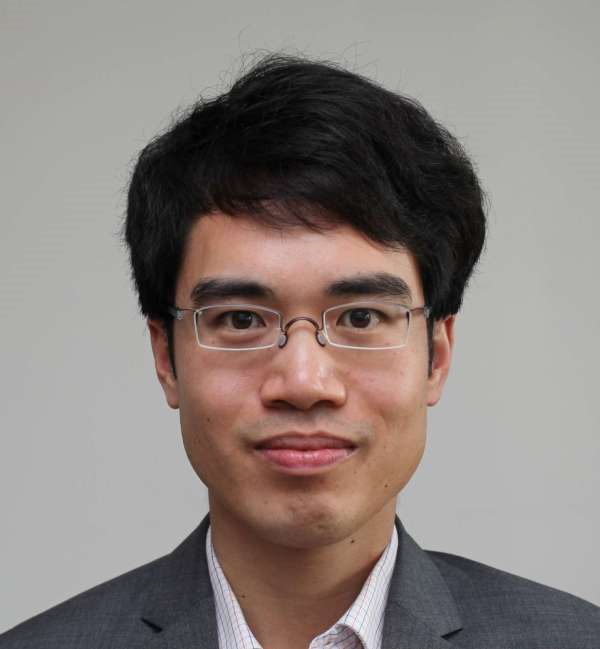 |
Collaborator Senior Lecturer, University of Surrey, UK |
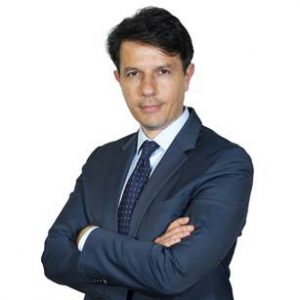 |
Collaborator Associate Professor, LUISS University, Rome, Italy |
Conceptual framework
Project complexity is constantly augmenting because of technological advances, increasingly demanding and dynamic markets, the growing number and sophistication of relevant standards, models and institutions, and the ever more participatory and pluralistic nature of society and political processes. The scientific literature on project complexity confounds three aspects of this phenomenon: antecedents, such as the number of relevant aspects and interactions between them; mechanisms, such as the emergence of new project properties, and consequences, such as the unpredictability of developments. We draw distinctions between these aspects and use them to identify four types of complexity in terms of antecedents, and to understand their structural consequences for projects. We then propose a series of hypotheses on the best knowledge production strategies to address each type of structural complexity. Subsequently, we distinguish four other types of complexity in terms of mechanisms, identify their dynamic consequences for projects, and propose hypotheses on the best strategies to increase the flexibility of the project in order to address each type of dynamic complexity. This conceptual framework is summarized by the following figure:

You can obtain more details on our preliminary conceptual framework from an article we just published in the journal Complexity. The article is available in open access by clicking here.
Research methods
The empirical research that we will carry out will enable us to refine the theoretical framework, to develop hypotheses and to test them empirically. This research will take place in three stages.
1) Analysis of articles on projects carried out in different fields
The first step is a qualitative content analysis of articles referring to complex projects in the four domains of activity in which we will perform case studies (see below). This analysis will allow us to deepen our understanding of project complexity in each domain and will reveal specific indicators of the consequences of complexity, such as technical changes or construction changes, and major shocks, such as the US Department of Commerce decision to impose high tariffs on Bombardier CSeries aircraft. The data will come from articles in professional and general journals as well as from other public documents. Data analysis will use a coding scheme based on the theoretical framework, but will pay attention to new themes emerging from the data.
2) Retrospective case studies of 12 complex projects
To provide the required variety of backgrounds and mechanisms, the studies will investigate projects in four domains, Infrastructure, Software / ICT, Biotechnology and Aerospace, as well as in three institutional contexts, North America, Europe and Asia. Data for each case study will be obtained primarily from 6 to 10 retrospective interviews with key project participants. In addition to interview data, we will look for information on the complexity indicators identified in the previous step. For example, for infrastructure projects, we will look for statistics and reports on incidents, change orders, delays, and cost overruns, as well as evidence regarding problem and conflict resolution. The data will be used to produce narrative case reports, which will provide a holistic perspective on the activities and processes that occurred each project. These reports will also describe representative examples of events and restructuring episodes attributable to complexity. By studying several interrelated aspects of the project, from a temporal perspective, the separate analysis of each case will deepen our understanding of the origin, evolution and consequences of complexity, as well as the effects of knowledge production and flexibility strategies. Results of separate case analyses will enable us to refine the key dimensions of our concepts and to grasp how they articulate in a given project. We will also perform a comparative analysis of the 12 cases, in order to corroborate the assumed influences between the type of project and context and the nature of complexity, as well as our assumptions concerning the effectiveness of various strategies.
3) Large-scale quantitative survey
The survey will be used to test the refined hypotheses that will result from the previous steps. This survey will be based on a relatively short quantitative psychometric-type questionnaire (about 50 questions) designed to measure our key theoretical concepts. Questionnaire development will rely on the results of our qualitative research, for example by using, if possible, the language employed by the practitioners interviewed for the case studies. The survey will be implemented online and leaders of projects recently completed in various sectors around the world will be invited to fill it out. In order to be able to use use multivariate statistical analyses that capture moderation and mediation effects, we aim to obtain at least 200 responses to our questionnaire.
Benefits for participants and project management practitioners
Managers and companies participating in the case studies will get an opportunity to revisit a recently completed project, through a process structured by our research methods and instruments. This kind of retrospective is an essential part of any organizational learning and inter-project knowledge transfer process. To support this process, researchers will provide participating companies with a detailed project report, which will include an analysis of their complexity management practices. In addition, involvement in the project will provide experienced practitioners with an opportunity to reflect on the specifics of project complexity in their domain, by interacting with recognized experts on this topic. All participants, including survey respondents, will gain priority access to the overall results of our research program. Researchers will be pleased to discuss these results with participants in a personalized and in-depth manner.
More generally, we hope that our results will enable a deeper understanding of project complexity and of the approaches that can be used to tackle it. We also hope that these results will be a source of inspiration for concrete practices that will make project management more effective. Among other things, results could stimulate the development of practices that could be used to manage specific forms of complexity affecting projects in the domains that we will study, such as software. All of this, we hope, will help ensure that projects will produce more value for clients, users and society overall, while minimizing execution cost and duration, reducing conflicts and disputes, and contributing to the well-being of affected populations and to economic development.
Contacts
Practitioners and organizations interested that would like to participate in our research could contact the Principal Investigator via email at the following address:
floricel [dot] serghei {at} uqam [dot] ca